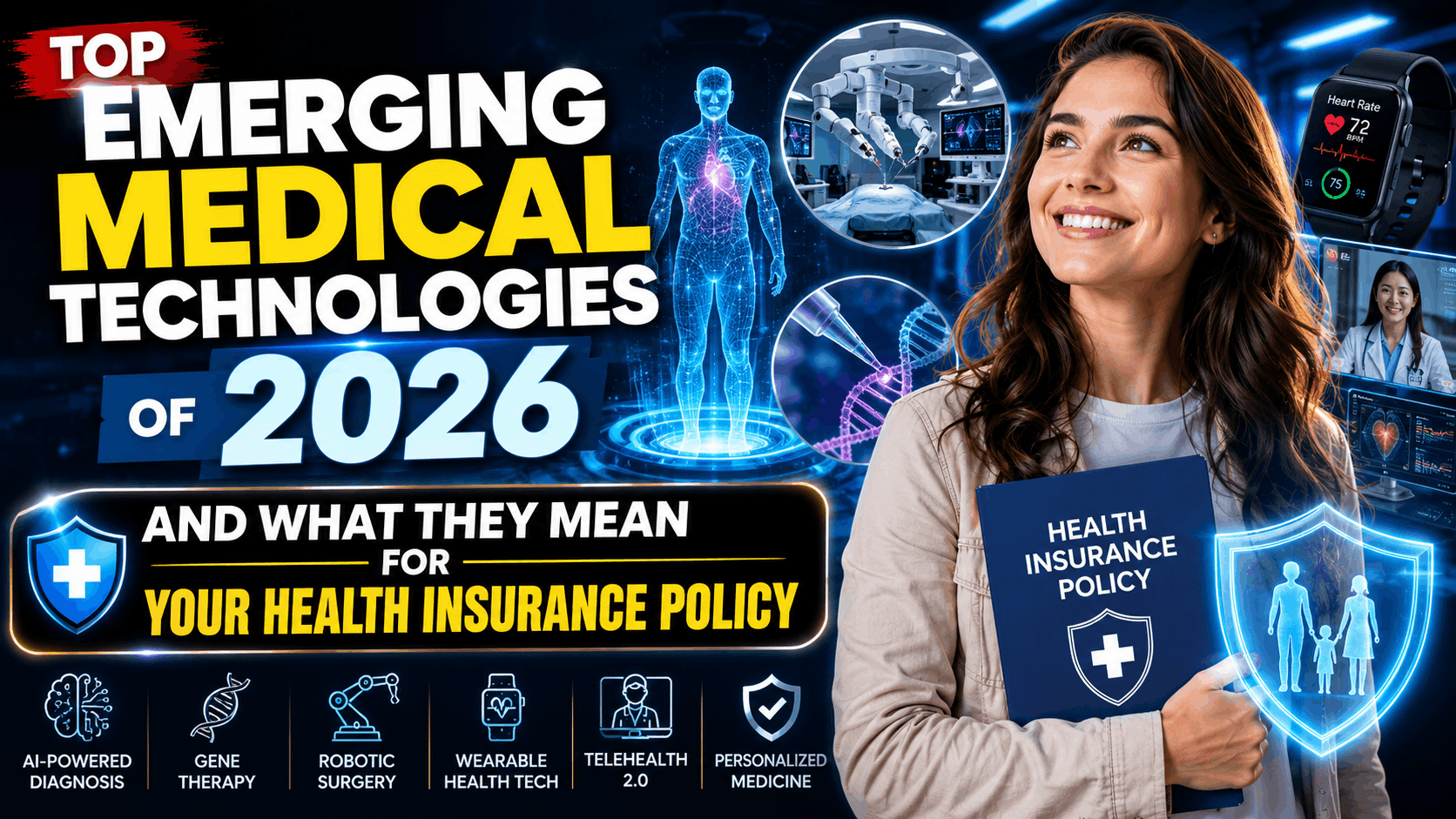
Top Emerging Medical Technologies of 2026 and What They Mean for Your Health Insurance Policy
The landscape of healthcare is shifting beneath our feet. We are no longer just talking about managing diseases; we are talking about curing the previously incurable. According to the World Economic Forum’s (WEF) latest Top 10 Emerging Technologies of 2026 report, medicine is entering a hyper-personalized, ultra-precise era.
From cancer vaccines tailored to your specific DNA to AI-driven virtual twins that predict heart attacks before they happen, these innovations are breathtaking.
But as a consumer, there is a massive, looming question that rarely gets answered in scientific journals: Who is going to pay for this?
How will these groundbreaking medical technologies alter your health insurance policy, your premiums, and your coverage boundaries over the next few years? Let’s break down the top medical advancements of 2026 and analyze their direct impact on your wallet and your wellness.
1. Personalized mRNA Cancer Vaccines
For years, the word “vaccine” meant prevention. In 2026, it means eradication. Moving past the initial hype of the pandemic era, scientists have successfully scaled personalized mRNA cancer vaccines. Instead of a one-size-fits-all chemotherapy, doctors now sequence the genetic profile of a patient’s unique tumor and create a custom mRNA vaccine. This vaccine explicitly instructs the patient’s own immune system to hunt down and destroy any remaining cancer cells, preventing recurrence.
The Insurance Impact: The High-Cost Coverage Battle
While the clinical trials are highly successful, the cost of manufacturing a unique vaccine for a single individual is astronomical.
The Challenge: Currently, most standard health insurance policies categorize these therapies under “experimental” or “specialty drugs,” which often leads to immediate claim denials or requires grueling pre-authorization processes.
The Shift: Insurance companies are beginning to realize that paying $100,000 for a custom vaccine that cures a patient permanently is cheaper than paying $50,000 annually for a decade of chronic cancer maintenance and hospital stays. Expect top-tier insurers to introduce “Advanced Biotech Riders” or specialized critical illness add-ons to cover these personalized treatments.
2. AI-Powered Diagnostics and “Digital Twins”
Artificial Intelligence has officially graduated from a back-office administrative tool to an active clinical assistant. In 2026, AI algorithms are analyzing medical imaging (like MRIs and CT scans) with a 50% lower error rate than human doctors in spotting early-stage conditions like diabetic retinopathy or localized tumors.
More fascinatingly, medical tech giants like Medtronic are deploying “Digital Twins”—virtual, data-driven replicas of a patient’s specific organ. For instance, before a surgeon performs a complex heart valve replacement, they can “rehearse” the surgery on a digital replica of your heart to predict exactly how your body will react.
The Insurance Impact: A Premium Discount for Prevention
This technology shifts insurance from reactive (paying when you get sick) to predictive (stopping you from getting sick).
The Good News: Because AI diagnostics can catch diseases in stage 0 or 1, treatments are vastly cheaper. Insurers love this. In the near future, policyholders who consent to regular AI-driven health screenings or share data from advanced medical wearables might see massive discounts on their monthly health insurance premiums.
The Catch: Data privacy will become a battlefield. If your “digital twin” predicts a high probability of a future medical event, insurers cannot legally deny you coverage due to pre-existing condition protections (like the ACA in the US), but it could heavily influence how comprehensive global policies structure their corporate wellness packages.
3. Exosome Drug Delivery Systems
Another star of the 2026 WEF report is Exosome Drug Delivery. One of the biggest roadblocks in modern medicine is getting a drug to hit the exact target cell without destroying healthy cells along the way (which is why chemotherapy makes patients so sick). Exosomes are naturally occurring biological nanoparticles that cells use to communicate. Scientists are now engineering these exosomes to act as ultra-precise microscopic delivery trucks, carrying heavy medications directly into previously inaccessible targets, including the human brain.
The Insurance Impact: Outpatient Shift and Reduced Hospitalization Claims
Lower Secondary Costs: Because exosome delivery minimizes side effects, patients do not require long, expensive hospital stays to recover from the toxicity of the drugs.
Policy Adjustments: Health insurance policies will likely adjust their “Room Rent” and “Hospitalization” limits, shifting more capital toward “Outpatient Care (OPD)” and “Daycare Procedures.” If you are buying a policy today, ensure it has robust OPD and domiciliary hospitalization riders, as the future of medicine is turning hospital stays into a rarity.
4. Reimagined Blood Testing & Liquid Biopsies
Gone are the days when a comprehensive health checkup required draining five vials of blood and waiting a week for laboratory results. By mid-2026, microfluidic technologies have gone mainstream. Using a single drop of blood from a simple finger prick, point-of-care devices can run dozens of complex diagnostic tests in minutes. Furthermore, advanced “liquid biopsies” can now screen for over 50 types of cancer simultaneously by detecting microscopic traces of tumor DNA floating in the bloodstream.
The Insurance Impact: Mandatory Annual Screenings
Insurers are already rewriting their wellness benefits. Expect health insurance policies to make these multi-cancer liquid biopsies a mandatory or highly incentivized part of your annual free checkup. By spending a few hundred dollars on a drop-of-blood test, insurers save millions by preventing advanced chronic claims.
The Ultimate Verdict for Policyholders
As medicine moves from a “standardized whole” to an “individualized cure,” health insurance must evolve or risk bankruptcy. For you, the consumer, this means your standard, basic health insurance policy from five years ago is rapidly becoming obsolete.
When reviewing or purchasing your health insurance policy moving forward, do not just look at the sum insured. Look at the Sub-limits on Biologics, Modern Treatment Cover clauses, and Genetic Engineering exclusions. The future of medicine is miraculous, but ensuring your insurance policy is advanced enough to cover it is your responsibility.
Disclaimer
Disclaimer: The information provided in this article is for educational and informational purposes only and should not be construed as professional financial, legal, or medical advice. Health insurance policies, coverage terms, and regulatory approvals vary significantly by region, country, and individual provider. Always consult with a licensed insurance advisor or a qualified healthcare professional before making any decisions regarding your healthcare coverage or medical treatments. The mentions of specific technologies or reports reflect the global trends as of 2026 and do not guarantee coverage by any specific insurance entity.
IRDAI New Rules 2026: 3 Big Changes in Health Insurance You Must Know!